
6 Things Every Parent Should Know About Teen Sports Nutrition

Updated: Sep 10
If you have a sporty or very active tween or teen, you’ve probably realised that keeping them well-fuelled can feel like a full-time job. Long training days, eating-on-the-go (in the heat!), large appetites (or days when they insist they’re “not hungry at all”) — it’s a lot for any parent to manage. And the sports nutrition advice online? Often confusing, overwhelming, or simply not tailored to real and busy families.
My goal is simple: to make sports nutrition for young teens feel more manageable, without compromising on evidence-based information.
Here are six things every parent should know to help their young athlete train well, recover better, and protect their long-term health.

Young athletes need WAY more food than you think.
Underfuelling is the most common issue I see when working with young athletes — even in families who are eating “well” and trying hard to do the right thing.
Many parents are shocked by how much energy sport demands on top of growth, puberty, school, and daily life. When food intake doesn’t keep up, both the body and performance suffer.
Would your child’s coach let them play in a match if they kept skipping training? Probably not. Similarly, when a young athlete arrives for training without having eaten properly, their body isn’t ready for the physical demands of exercise, and they shouldn't be training.
When we view missed meals the same way we think about missed training sessions, it becomes obvious: consistent, balanced eating isn’t optional. It’s part of the training plan.
My motto is this: If your body isn’t fuelled, you are not ready to train.
Underfuelling doesn’t just affect training; it also impacts:
Growth and development
Hormones and menstrual function
Immune function
Concentration and ability focus
Mood and mental health
Sleep
Gut health
Bone health
Long-term health and wellbeing (including long-term sporting success)
Young athletes need regular meals every 3-4 hours made from nourishing foods that provide enough energy from carbohydrates, protein, and fats. This balance helps the body to perform, recover, or adapt. They also need key nutrients, such as iron, calcium, zinc, vitamins, and antioxidants, to reduce the risk of injury and illness.
For most growing and maturing athletes, practically this means:
Three meals and three snacks every day.
Starting every day with breakfast. If training occurs early, an easy-to-digest pre-training snack remains essential. Followed by a recovery breakfast directly after training (before school starts).
Packing extra portable snacks in school and sports bags. Not all packaged snacks are equal, and there are plenty of nutritious, athlete-appropriate options when you know what to look for [see point below on packaged snacks].
Eating more than their less-active friends. This is normal, and something athletes often need reassurance about, especially during the tween and teen years, when comparison and the need to fit in are common.
Including a small easy-to-digest bedtime snack. This helps replenish energy and nutrients missed during busy days and supports both recovery and sleep. Examples include yoghurt, fruit and nuts, a peanut butter and banana sandwich, or a homemade smoothie.

A note on packaged snacks
In an ideal world, every snack would be made from scratch in your kitchen. In real life — especially with sporty kids in Singapore — days are long, hot, and highly mobile.
Packaged (or shop-bought) snacks are often framed as something to avoid. But for many young athletes, they are practical, hygienic, and reliable — and sometimes exactly what’s needed to get fuel in at the right time.
When children travel independently between school, home, and training, food safety and accessibility are important. A packaged snack that your child actually eats is far more useful than a “perfect” snack that melts, spoils, or gets left in the bottom of a bag.
Many packaged options:
provide quick carbohydrates for energy
are low in fibre, making it easy to digest before and during training
contain electrolytes (sodium) to help replenish losses from sweating
can be enriched with essential vitamins for extra support
have predictable taste and texture (especially important for sensory-sensitive kids)
are shelf-stable and reduce the risk of food-borne illnesses.
Used in addition to regular meals and fresh foods and produce, packaged snacks can be a supportive part of a realistic fuelling plan, not a sign of failure.
The goal isn’t perfection. It’s making sure your child has access to food — consistently, safely, and without stress.

General nutrition advice isn't written for your young athlete
Most mainstream nutrition advice is written for sedentary adults trying to eat “healthier” or aiming to become smaller, not for growing and maturing bodies training multiple times a week, wanting to break records and perform at their peak. When young athletes apply general wellness rules around sugar, portion control, or “clean eating,” they often unintentionally underfuel.
Young athletes have very different needs from the general population. When sport is added to school, growth, and daily life, energy demands increase exponentially. Yet many well-meaning messages around “clean eating,” high fibre, no-sugar or whole foods don’t account for performance nutrition.
For athletes, fuelling isn’t only about food quality. It’s about when food is eaten and how well it’s tolerated around training.
Before and during training, the goal is to provide accessible energy — fuel that is easy to digest and won’t sit heavily in the gut. This often means choosing lower-fibre, higher sugar, lower-fat options in the 1-2 hours before exercise, even if those foods appear less “nutritious” on paper.
This isn’t about replacing nourishing foods (which would be problematic). It’s about layering fuelling strategies:
fibre-rich, nutrient-dense meals earlier in the day
easily digestible, higher energy options closer to training
Used this way, lower-fibre options such as pretzels, honey or jam sandwiches, pancakes, and cereal bars support performance, comfort, and consistency without compromising overall nutrition.
This is where many athletes unintentionally underfuel. They try to follow general nutrition guidelines that prioritise fibre and satiety, but then struggle with appetite, gut discomfort, or low energy once training begins.
And that leads us to an important next point.
If your child trains for longer than an hour, water is probably not enough
Water is the ideal choice for hydration during shorter, more “recreational” sport sessions, especially for younger children or those still in the beginner stage of a sport. [Like me, who started playing tennis for the first time a few months ago, so my lessons involve a lot more picking up of balls than hitting them!]
However, once training sessions exceed an hour, or when intensity increases, such as with older or higher-level athletes or during competitions, relying solely on water misses a vital opportunity to replenish fuel and sustain performance and focus.
When the body needs to sustain activity for longer than an hour, it requires not only fluids but also fuel, in the form of carbohydrates.
This can be food-based, such as a pretzel, a sports bar, dried fruit, or even classic sliced oranges. However, for many sports, especially those with continuous play, limited breaks, or no space for food, this isn’t always practical.
This is where a sports drink comes in handy – a 2-in-1 of fluid and fuel. Commercial sports drinks can work, but many parents prefer to skip the artificial colours and flavours they come with.
A homemade version is just as effective, often better tolerated, and easy to make with ingredients you already have at home.
Homemade sports drink recipe (to make 1L):
250 ml of your child’s favourite 100% fruit juice (berry juices work particularly well)
750 ml water
2 tablespoons sugar
¼ teaspoon salt*
This simple mix provides everything your young athletes need for longer or high-intensity training sessions.
But remember, every sport — and every athlete — has different fuelling needs. A gymnast training in short, intense bursts doesn’t use energy in the same way a footballer does during a long, hot match. Even within the same sport, two teens with different bodies, digestive systems, appetites, training loads, and schedules can have completely different needs.
That’s why a one-size-fits-all approach rarely works.

But what about electrolytes during training?
Adding sodium (an electrolyte) can enhance the taste of drinks, encouraging hydration, which is beneficial for children who forget to or struggle to drink. However, it doesn’t boost performance as much as carbohydrates and fluids do, and electrolyte powders are often expensive.
In some specific cases, it can be a helpful addition. However, it’s best to seek personalised advice from a sports dietitian regarding your child’s electrolyte needs during training.
Electrolytes do matter after training, when your child needs to replace what they’ve lost from sweating. So let’s talk about what effective recovery looks like — and how to make the most of that golden window after training.

Having something to eat straight after training is sensible
Having something to eat after training matters, but there's no need to panic about the clock
An hour of intense training depletes your child's fuel reserves (muscle and liver glycogen stores). If their next session is a couple of days away, as is common for recreational sports participants, regular meals, snacks, and rest are usually enough to recover.
For a tween or teen who trains most days, or more than once a day, recovery nutrition after training becomes more important. But the old idea of a strict "golden window", where missing 30 to 60 minutes means the session's benefits are lost, isn't well supported by the evidence. Muscle stays receptive to protein and carbohydrate for many hours after training, not just the first half hour. The response is likely strongest early on, so eating relatively soon after training is still sensible. But if your child gets home late from practice, or isn't hungry straight away, they haven't missed anything critical.
Delaying nutrition for a long stretch, several hours with nothing at all, can still slow recovery and increase fatigue. So the goal isn't a race against the clock. It's making sure recovery food shows up within a reasonable time, without turning it into a rule that causes stress if it slips.
What they need, when they do eat:
Carbohydrates to replenish fuel stores
Some protein to support muscle repair and adaptation
Fluids to rehydrate
A small amount of sodium (electrolytes) to replace losses and support fluid balance
Simple, effective options:
Smoothie (fruit, yoghurt or milk, plus nut butter)
Chocolate milk (for older kids, look out for those with higher protein content) and a granola bar
Tuna or cheese sandwich or wrap
Tofu, egg or chicken with noodles or rice (great with added broth)
Onigiri or sushi (containing fish or chicken and rice)
Trail mix or biltong with a milk-based drink
Post-training fuel doesn't have to involve powders or supplements. A balanced meal, such as dinner, eaten at a reasonable time after training can also do the job. Real food naturally restores electrolytes too.
Remember, protein alone isn't enough for recovery. Carbohydrates are the priority, since they replace the fuel muscles have used.
Protein across the whole day matters more than any single post-training feed. Spreading protein evenly across breakfast, lunch and dinner tends to support muscle recovery better than loading most of it into one large evening meal. So the post-training snack is one part of the picture, not the only part that counts.
When recovery nutrition is consistent across the day, athletes are better able to train, adapt, and perform at their best in the next session.
Next, let's look at protein supplements and whether they are needed for teen athletes.

Protein supplements are rarely needed
Most young athletes don’t need protein powders; they need enough food. A balanced diet with regular meals and snacks easily provides all the protein they require for training, growth, and recovery.
Over the past 20 years, working with recreational and elite youth athletes, I have found that most young athletes consume (or, with a few minor dietary tweaks, can consume) enough protein. A protein supplement would be helpful only in two situations.
When a young person cannot meet their protein needs through food for medical, sensory, religious, or practical reasons. In many of these cases, we often consider a complete liquid meal supplement rather than an isolated protein powder. But in all these cases, consulting a dietitian first is ideal, because there might be other nutrients, such as iron or calcium, missing as well.
Convenience: for instance, when a teenager genuinely has no access to food immediately after training (often when they are living in boarding schools, or training in highly-structured environments, etc.)
And then, protein powders should ideally be used with food, such as adding them to oats, muffins, pancakes, or smoothies.
But even in these situations, the convenience carries several risks that parents should recognise.
1. Contamination risk
Many sports supplements — including protein powders — have been found to contain undeclared substances such as stimulants or anabolic agents. This often happens because products are manufactured in facilities that also produce performance-enhancing drugs that are banned in sport. Even trace contamination can result in a positive doping test, which can be devastating for young athletes.
Contamination isn’t limited to banned substances. Due to poor hygiene, unregulated sourcing, or inadequate quality control, protein powders have been found to contain harmful contaminants, including heavy metals (lead, arsenic, cadmium, mercury), BPA, pesticides, and other toxins.
To reduce risk, any supplement used by a young athlete should be third-party tested, such as Informed Sport or NSF Certified for Sport.
2. Misleading labelling and unregulated manufacturing
The supplement industry is loosely regulated. Manufacturers can:
make big claims with little scientific evidence
alter ingredient quantity between batches (without adjusting label)
include fillers or low-quality ingredients
omit harmful contaminants from the label
decide not to recall any contaminated batches or dangerous products that are brought to their attention
There is no routine, independent testing unless a product is voluntarily certified. Which means you can think you are ingesting 20g of protein, but you might very well not be.
3. Nutrition displacement
A protein shake is not a proper meal. When protein powders replace food, teenagers miss out on the carbohydrates, fibre, iron, vitamins, minerals, and phytonutrients that whole foods provide — all of which are vital for growth, immunity, mood, and performance.
A teen who meets their protein needs through food naturally fulfils many other nutrient requirements as well. A teen who relies on powders for protein often does not.
4. The gateway effect
Some research suggests that supplement use in adolescents can act as a gateway to later performance-enhancing substance use. There are a few reasons why this might happen.
For some teens, the attraction to supplements is part of a broader “quick-fix” mindset — powders and pills can start to feel like shortcuts to “better performance.” And because most safe, legal supplements offer only modest (if any) performance benefits, young athletes may find themselves searching for the next thing that promises a bigger boost.
That search can lead them down a path toward riskier, unsafe substances. This is one reason why I always emphasise focusing on the foundations first: food, fuelling patterns, sleep, recovery, mental health, and supportive training environments.
Supplements should only be considered on a case-by-case basis, ideally under the guidance of a healthcare professional specialising in youth sports.
Now that we’ve covered how to fuel the body, it’s important to look at something that can quietly undermine all of this: how your teen thinks about food and movement.

Tracking food, calories, macros, and movement can be a red flag for disordered behaviours
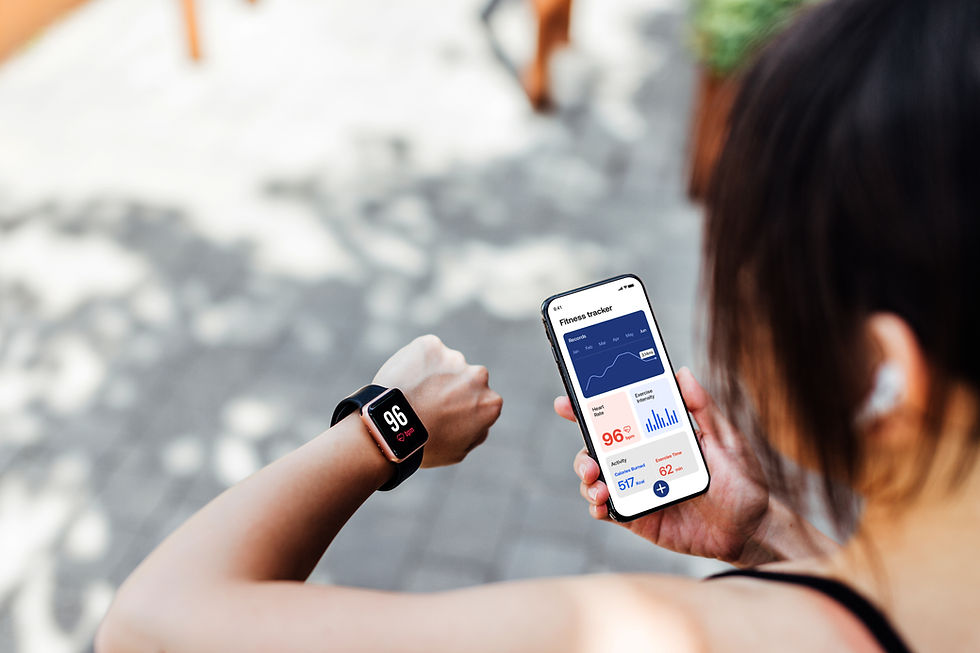
Tracking can appear “disciplined” from the outside, and it often begins innocently — a coach's suggestion, a school assignment, a new watch with a step counter, or a teen wanting to “improve their nutrition.” I even see articles such as “best calorie tracking apps for your teen". And with the rise of AI, methods to track are emerging rapidly.
But for many young people, especially those who are more vulnerable, tracking food or movement can quickly shift from a tool to a source of anxiety, guilt, and rigid food and exercise rules.
Unfortunately, all teen athletes are vulnerable. Athletic populations are one of the most at-risk population groups for eating disorder (ED) development.
It’s important to be clear: tracking does not automatically cause an eating disorder.
Instead, it can increase risk among certain young people. And not just girls - I see it often in male athletes too! In my experience, it unfolds as follows.
First, certain personality traits, such as perfectionism, obsessive-compulsiveness, high achievement orientation, and sensation-seeking, make some people attracted to tracking, and it can feel rewarding at first. These traits are strongly associated with eating disorders, which is why teens who have them are more likely to be drawn to apps or features that turn food and movement into numbers.
Second, once tracking begins, it can quickly spiral out of control. For some teens, it leads to distress around eating, rigid rules, avoidance of social events, or the belief that food and movement need to be perfectly “balanced out”.
Research supports this: mainstream diet and fitness apps tend to intensify disordered thoughts by pushing constant measurement, comparison, and goal-chasing — all of which feed perfectionistic and disordered thinking.
It’s also worth remembering that the most popular diet and fitness apps were never designed for children or teens. Many have age ratings of 16 or 18+. They don’t account for growth, puberty, hormones, neurodevelopment, or the fluctuating nutritional needs of young athletes. And not to mention, they are often riddled with errors.
Another concern with mainstream health, fitness, and calorie-tracking apps is privacy and advertising. Because they are designed for adults, they often contain targeted ads — including those related to dieting, weight loss, supplements, alcohol, and other content inappropriate for younger users. Despite laws intended to protect children online, research has shown that apps frequently collect and share personal data without age verification or parental consent. This means a tween or teen may be exposed to persuasive marketing or have their health information sold or used for profiling. For young people who are already vulnerable to comparison, body image worries, or perfectionism, these advertising and privacy risks can add an extra layer of harm.
For most children and adolescents, the risks of tracking far outweigh any perceived benefits. Tracking can become obsessive, restrict eating, increase anxiety, and disconnect teens from their own hunger and fullness cues. Growing bodies need flexibility and consistency — not numbers, tallies, or algorithms.
If an app is needed at all, it’s usually one that supports routines, not restrictions. Apps that remind teenagers to eat, drink, engage in self-care or take breaks (such as EatWise Meal Reminder, Finch or Tiimo) are far more appropriate than those that monitor or grade their eating.
And if your child is asked to track their eating for a school project, you have every right to withdraw your child from the assignment. You can read more about this topic here, or get in touch with me directly.
Closing Thoughts
Supporting a young athlete’s sporting career isn’t just about the training they do. It’s about the foundation we build around them. Regular meals, smart hydration, consistent recovery fuel, a healthy relationship with food, and a cautious approach to supplements all help them grow, thrive, and enjoy their sport for the long term.
And while many of the habits in youth sport today feel normal: skipping meals, training on empty, relying on powders, obsessively tracking food; they don’t always mean healthy. Or safe.
The reality is that most teens are doing their best, but they’re navigating busy schedules, changing bodies, academic pressures, and mixed messages from coaches, friends, and social media.
And as a parent myself, I know you, the parent or caregiver, are also doing your best, often juggling a hundred moving parts while trying to keep everyone well-fed, well-rested, and emotionally supported.
At the end of the day, no two young athletes have the same fuel needs — their sport, body, routines, and preferences shape what works best for them. If you’re unsure whether your child is eating enough, at the correct times, or getting what they need to stay healthy and perform well, you don’t have to figure it out alone.
If you’d like personalised, practical guidance that fits your child’s needs, their training load, and your family’s reality, I invite you to book a free 15-minute Discovery Call.
It’s a quick, low-pressure way for us to explore whether support might be helpful.
You know your child best. I’m here to help you translate that into evidence-based fuelling strategies that help them feel strong, confident, and capable — in sport and beyond.
References:
Kerksick, C.M., Arent, S., Schoenfeld, B.J. et al. International Society of Sports Nutrition Position Stand: Nutrient Timing. J Int Soc Sports Nutr 14, 33 (2017). https://doi.org/10.1186/s12970-017-0189-4
Mountjoy M, Ackerman KE, Bailey DM, et al 2023 International Olympic Committee’s (IOC) consensus statement on Relative Energy Deficiency in Sport (REDs) British Journal of Sports Medicine 2023;57:1073-1098.
Gould RJ, Ridout AJ, Newton JL. Relative Energy Deficiency in Sport (RED-S) in Adolescents - A Practical Review. Int J Sports Med. 2023 Apr;44(4):236-246. doi: 10.1055/a-1947-3174. Epub 2022 Sep 19. PMID: 36122585.
Miller KC. et al. An Evidence-Based Review of the Pathophysiology, Treatment, and Prevention of Exercise-Associated Muscle Cramps. J Athl Train. 2022; 57(1):5-15.
Barnes KA, Anderson ML, Stofan JR, Dalrymple KJ, Reimel AJ, Roberts TJ, Randell RK, Ungaro CT, Baker LB. Normative data for sweating rate, sweat sodium concentration, and sweat sodium loss in athletes: An update and analysis by sport. J Sports Sci. 2019 Oct;37(20):2356-2366.
Hurst, P. (2023). Are Dietary Supplements a Gateway to Doping? A Retrospective Survey of Athletes’ Substance Use. Substance Use & Misuse, 58(3), 365–370. https://doi.org/10.1080/10826084.2022.2161320
Eikey EV. Effects of diet and fitness apps on eating disorder behaviours: qualitative study. BJPsych Open. 2021 Sep 24;7(5):e176. doi: 10.1192/bjo.2021.1011. PMCID: PMC8485346.
Honary M, Bell BT, Clinch S, Wild SE, McNaney R. Understanding the Role of Healthy Eating and Fitness Mobile Apps in the Formation of Maladaptive Eating and Exercise Behaviors in Young People. JMIR Mhealth Uhealth. 2019 Jun 18;7(6):e14239. doi: 10.2196/14239. PMID: 31215514; PMCID: PMC6604512.
Buckley, G.L.; Lassemillante, A.-C.M.; Cooke, M.B.; Belski, R. The Development and Validation of a Disordered Eating Screening Tool for Current and Former Athletes: The Athletic Disordered Eating (ADE) Screening Tool. Nutrients 2024, 16, 2758. https://doi.org/10.3390/nu16162758
Wells KR, Jeacocke NA, Appaneal R, Smith HD, Vlahovich N, Burke LM, Hughes D. The Australian Institute of Sport (AIS) and National Eating Disorders Collaboration (NEDC) position statement on disordered eating in high performance sport. Br J Sports Med. 2020 Nov;54(21):1247-1258. doi: 10.1136/bjsports-2019-101813. Epub 2020 Jul 13. PMID: 32661127; PMCID: PMC7588409.
https://www.health.harvard.edu/staying-healthy/the-hidden-dangers-of-protein-powders


Comments